MDC - BioLab - Core Panel
What this panel is for
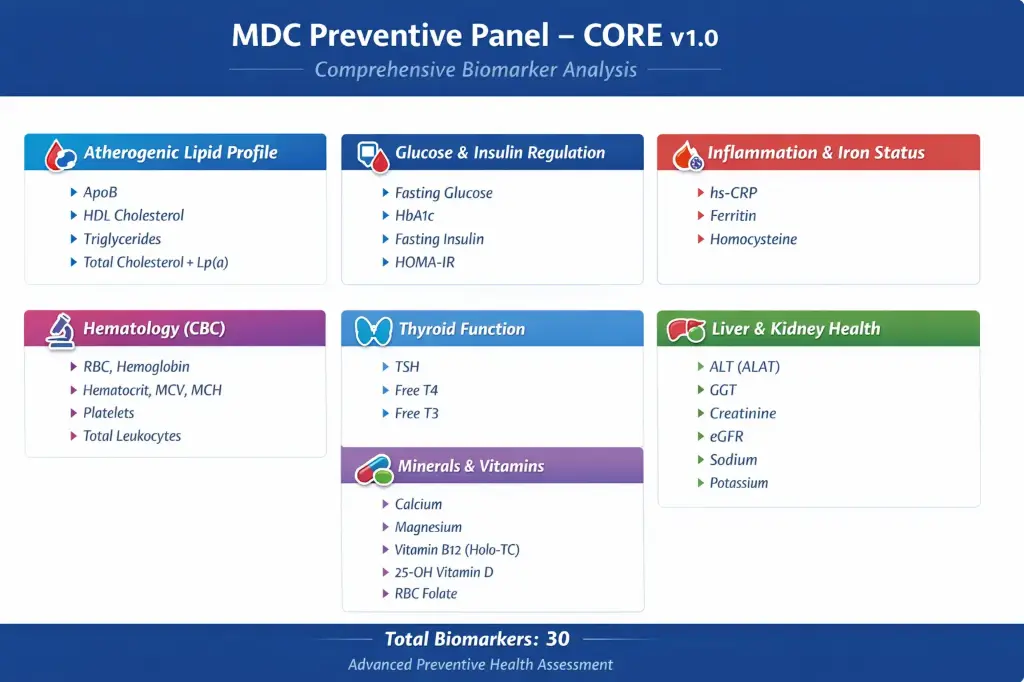
This Core Panel is a multi-marker laboratory test designed to provide a structured overview of key wellness domains. It combines lipid markers, glucose and insulin markers, inflammation, iron status, thyroid markers, kidney markers, liver enzymes, vitamins, electrolytes, and a basic blood count. The goal is to support informed, non-medical tracking over time. Results are best interpreted with reference ranges and personal context.
Cardiometabolic tracking
The panel includes Total Cholesterol, HDL cholesterol, Triglycerides, and Apolipoprotein B (ApoB) to help contextualize lipid balance. It also includes Fasting glucose, HbA1c, Fasting insulin, and HOMA-IR (calculated) to provide complementary views of glucose exposure and insulin dynamics. Together, these markers are often used to monitor how lifestyle patterns relate to cardiometabolic trends. Repeating the same panel can help compare like-for-like results over time.
Inflammation and general status markers
hs-CRP is included as a commonly used marker that can reflect systemic inflammatory activity in a broad, non-specific way. A complete blood count section (Erythrocytes/RBC, Hemoglobin, Hematocrit, MCV, MCH, Platelets, Leukocytes) provides additional context about general blood parameters. These results can be useful when reviewing overall wellness, training recovery, and nutrition adequacy. Any unexpected values should be discussed with a healthcare professional.
Thyroid and nutrient-related markers
TSH, Free T4, and Free T3 are included to provide a thyroid-related snapshot. The panel also measures 25-OH Vitamin D, Vitamin B12 (Holo-TC preferred), and RBC Folate to support monitoring of key nutrient status markers. These values can be reviewed alongside dietary intake and supplementation habits. If you are using thyroid medication or high-dose supplements, consistent timing and disclosure can improve interpretability.
Iron status and homocysteine context
Ferritin is included as a commonly used marker to contextualize iron stores. Homocysteine is included as a functional marker often reviewed alongside B12 and folate status. Looking at these together can help frame nutrition discussions around methylation-related nutrients without implying any medical outcome. Follow-up testing may be considered depending on baseline results and goals.
Kidney, liver, and electrolyte balance
Creatinine and eGFR (calculated) are included as routine kidney-related markers. ALT (ALAT) and GGT provide common liver enzyme measurements used for general monitoring. Electrolytes and minerals (Sodium, Potassium, Calcium, Magnesium, and Magnesium (serum)) add context for hydration and mineral balance. Consistent pre-test conditions (fasting status, exercise, alcohol intake) can help reduce variability.
| Class | Ingredient | Quantity | NRV% |
|---|---|---|---|
| Atherogenic Lipid Profile | Apolipoprotein B (ApoB) | 1.0 Unidades | 0.0 |
| Atherogenic Lipid Profile | HDL cholesterol | 1.0 Unidades | 0.0 |
| Atherogenic Lipid Profile | Triglycerides | 1.0 Unidades | 0.0 |
| Glucose & Insulin Regulation | Fasting glucose | 1.0 Unidades | 0.0 |
| Glucose & Insulin Regulation | HbA1c | 1.0 Unidades | 0.0 |
| Glucose & Insulin Regulation | Fasting insulin | 1.0 Unidades | 0.0 |
| Glucose & Insulin Regulation | HOMA-IR (calculated) | 1.0 Unidades | 0.0 |
| Inflammation & Metabolic Regulation | hs-CRP | 1.0 Unidades | 0.0 |
| Inflammation & Metabolic Regulation | Ferritin | 1.0 Unidades | 0.0 |
| Inflammation & Metabolic Regulation | Homocysteine | 1.0 Unidades | 0.0 |
| Thyroid & Energy Axis | TSH | 1.0 Unidades | 0.0 |
| Thyroid & Energy Axis | Free T4 | 1.0 Unidades | 0.0 |
| Thyroid & Energy Axis | Free T3 | 1.0 Unidades | 0.0 |
| Liver Function & Metabolic | ALT (ALAT) | 1.0 Unidades | 0.0 |
| Liver Function & Metabolic | GGT | 1.0 Unidades | 0.0 |
| Renal Function & Electrolyte Balance | Creatinine | 1.0 Unidades | 0.0 |
| Renal Function & Electrolyte Balance | eGFR (calculated) | 1.0 Unidades | 0.0 |
| Micronutrient Status | 25-OH Vitamin D | 1.0 Unidades | 0.0 |
| Micronutrient Status | Vitamin B12 (Holo-TC preferred) | 1.0 Unidades | 0.0 |
| Micronutrient Status | RBC Folate | 1.0 Unidades | 0.0 |
| Micronutrient Status | Magnesium (serum) | 1.0 Unidades | 0.0 |
| Renal Function & Electrolyte Balance | Sodium | 1.0 Unidades | 0.0 |
| Renal Function & Electrolyte Balance | Potassium | 1.0 Unidades | 0.0 |
| Micronutrient Status | Calcium | 1.0 Unidades | 0.0 |
| Atherogenic Lipid Profile | Total Cholesterol | 1.0 Unidades | 0.0 |
| Hematology & Oxygen Transport | Erythrocytes (RBC) | 1.0 Unidades | 0.0 |
| Hematology & Oxygen Transport | Hemoglobin | 1.0 Unidades | 0.0 |
| Hematology & Oxygen Transport | Hematocrit | 1.0 Unidades | 0.0 |
| Hematology & Oxygen Transport | MCV | 1.0 Unidades | 0.0 |
| Hematology & Oxygen Transport | MCH | 1.0 Unidades | 0.0 |
| Hematology & Oxygen Transport | Platelets | 1.0 Unidades | 0.0 |
| Hematology & Oxygen Transport | Leukocytes (Total) | 1.0 Unidades | 0.0 |
| Atherogenic Lipid Profile | Lipoprotein (a) Lp(a) | 1.0 Unidades | 0.0 |
| Liver Function & Metabolic | Albumin | 1.0 Unidades | 0.0 |
| Inflammation & Metabolic Regulation | Uric Acid | 1.0 Unidades | 0.0 |
Capsules Ingredients:
Allergens:
| Title | Description |
|---|---|
| Bleeding disorders or anticoagulant therapy – Medium Risk | Blood draw procedures can increase bruising risk, so extra care and professional guidance may be needed. |
| Severe needle phobia or history of fainting with blood draws – Medium Risk | Venipuncture may trigger vasovagal symptoms in susceptible individuals. |
| Active infection or acute inflammatory episode – Low Risk | Short-term illness can temporarily shift markers such as hs-CRP and may reduce comparability to baseline. |
| Title | Description |
|---|---|
| Bruising at puncture site – Low Risk | A small bruise can occur after venipuncture, especially with fragile veins. |
| Lightheadedness or fainting – Low Risk | Some people may feel dizzy during or after a blood draw, particularly when fasting. |
| Local soreness – Low Risk | Mild tenderness at the draw site can occur for a short period after sampling. |
| Title | Description |
|---|---|
| Thyroid hormone medication – Medium Risk | Thyroid labs (TSH, Free T4, Free T3) can be influenced by dosing and timing, so consistent timing and disclosure are important. |
| Glucose-lowering medications – Medium Risk | Fasting glucose, insulin, HbA1c, and HOMA-IR results can be affected by antidiabetic therapies and recent dosing. |
| Lipid-lowering medications – Medium Risk | Statins and other lipid therapies can change Total Cholesterol, HDL, Triglycerides, and ApoB values. |
| High-dose biotin supplements – Medium Risk | Biotin can interfere with some immunoassays used for hormone and vitamin measurements depending on the lab method. |
| Title | Description |
|---|---|
| General supplement warning – Low Risk | Food supplements should not be used as a substitute for a varied and balanced diet and a healthy lifestyle. |
| Daily dose warning – Low Risk | Do not exceed the recommended daily intake. |
| Children warning – Low Risk | Keep out of reach of young children. |
| Fasting and medication timing – Medium Risk | If fasting is required, follow the lab instructions and discuss medication timing with a healthcare professional to avoid misleading results. |
| Pregnancy and breastfeeding – Medium Risk | If pregnant or breastfeeding, discuss the appropriateness and timing of lab testing with a qualified healthcare professional. |
| Manufacturing trace warning – Low Risk | May contain very small amounts of allergens due to shared production equipment, even when not present in the ingredient list. |
| Title | Description | Bioavailability |
|---|---|---|
| Apolipoprotein B (ApoB) | Measured biomarker used to quantify ApoB-containing lipoprotein particle burden for lipid profiling context. | Not applicable (laboratory analyte measurement, not a supplement ingredient). |
| HDL cholesterol | Measured biomarker used to contextualize HDL cholesterol levels within a lipid profile. | Not applicable (laboratory analyte measurement, not a supplement ingredient). |
| Triglycerides | Measured biomarker used to assess circulating triglyceride levels as part of metabolic and lipid monitoring. | Not applicable (laboratory analyte measurement, not a supplement ingredient). |
| Fasting glucose | Measured biomarker used to assess fasting blood glucose as part of metabolic monitoring. | Not applicable (laboratory analyte measurement, not a supplement ingredient). |
| HbA1c | Measured biomarker reflecting average glucose exposure over time for longer-term metabolic tracking. | Not applicable (laboratory analyte measurement, not a supplement ingredient). |
| Fasting insulin | Measured biomarker used to contextualize insulin levels in a fasting state for metabolic tracking. | Not applicable (laboratory analyte measurement, not a supplement ingredient). |
| HOMA-IR (calculated) | Calculated index derived from fasting glucose and insulin to contextualize insulin resistance trends. | Not applicable (calculated laboratory index, not a supplement ingredient). |
| hs-CRP | Measured biomarker used to provide a general, non-specific indicator of systemic inflammatory activity. | Not applicable (laboratory analyte measurement, not a supplement ingredient). |
| Ferritin | Measured biomarker used to contextualize iron storage status. | Not applicable (laboratory analyte measurement, not a supplement ingredient). |
| Homocysteine | Measured biomarker often reviewed alongside B-vitamin status for functional nutrition context. | Not applicable (laboratory analyte measurement, not a supplement ingredient). |
| TSH | Measured biomarker used to contextualize pituitary thyroid signaling as part of thyroid monitoring. | Not applicable (laboratory analyte measurement, not a supplement ingredient). |
| Free T4 | Measured biomarker used to assess circulating free thyroxine as part of thyroid monitoring. | Not applicable (laboratory analyte measurement, not a supplement ingredient). |
| Free T3 | Measured biomarker used to assess circulating free triiodothyronine as part of thyroid monitoring. | Not applicable (laboratory analyte measurement, not a supplement ingredient). |
| ALT (ALAT) | Measured enzyme used to provide context on liver-associated enzyme activity in routine monitoring. | Not applicable (laboratory analyte measurement, not a supplement ingredient). |
| GGT | Measured enzyme used to provide context on liver and biliary-associated enzyme activity in routine monitoring. | Not applicable (laboratory analyte measurement, not a supplement ingredient). |
| Creatinine | Measured biomarker used to contextualize kidney filtration and muscle-related creatinine production. | Not applicable (laboratory analyte measurement, not a supplement ingredient). |
| eGFR (calculated) | Calculated estimate of kidney filtration derived from creatinine and demographic inputs for routine monitoring. | Not applicable (calculated laboratory index, not a supplement ingredient). |
| 25-OH Vitamin D | Measured biomarker used to assess vitamin D status over time. | Not applicable (laboratory analyte measurement, not a supplement ingredient). |
| Vitamin B12 (Holo-TC preferred) | Measured biomarker used to contextualize active B12 status (holotranscobalamin when available). | Not applicable (laboratory analyte measurement, not a supplement ingredient). |
| RBC Folate | Measured biomarker used to assess longer-term folate status via red blood cell folate content. | Not applicable (laboratory analyte measurement, not a supplement ingredient). |
| Magnesium (serum) | Measured biomarker used to assess circulating magnesium concentration for mineral status context. | Not applicable (laboratory analyte measurement, not a supplement ingredient). |
| Sodium | Measured electrolyte used to contextualize hydration and electrolyte balance. | Not applicable (laboratory analyte measurement, not a supplement ingredient). |
| Potassium | Measured electrolyte used to contextualize electrolyte balance and dietary intake patterns. | Not applicable (laboratory analyte measurement, not a supplement ingredient). |
| Calcium | Measured mineral used to contextualize calcium status as part of routine chemistry panels. | Not applicable (laboratory analyte measurement, not a supplement ingredient). |
| Magnesium | Measured mineral value used to contextualize magnesium status (often part of standard chemistry reporting). | Not applicable (laboratory analyte measurement, not a supplement ingredient). |
| Total Cholesterol | Measured biomarker used to provide an overall cholesterol value within a lipid profile. | Not applicable (laboratory analyte measurement, not a supplement ingredient). |
| Erythrocytes (RBC) | Measured blood count parameter used to quantify red blood cell concentration. | Not applicable (laboratory analyte measurement, not a supplement ingredient). |
| Hemoglobin | Measured blood parameter used to quantify hemoglobin concentration for oxygen-carrying capacity context. | Not applicable (laboratory analyte measurement, not a supplement ingredient). |
| Hematocrit | Measured blood parameter representing the proportion of blood volume occupied by red blood cells. | Not applicable (laboratory analyte measurement, not a supplement ingredient). |
| MCV | Measured red blood cell index used to contextualize average red blood cell size. | Not applicable (laboratory analyte measurement, not a supplement ingredient). |
| MCH | Measured red blood cell index used to contextualize average hemoglobin content per red blood cell. | Not applicable (laboratory analyte measurement, not a supplement ingredient). |
| Platelets | Measured blood count parameter used to quantify platelet concentration for general hematology context. | Not applicable (laboratory analyte measurement, not a supplement ingredient). |
| Leukocytes (Total) | Measured blood count parameter used to quantify total white blood cell concentration for general immune cell context. | Not applicable (laboratory analyte measurement, not a supplement ingredient). |
| Allergen | Source Ingredient | Mandatory | Inference |
|---|---|---|---|
| None | None | No | None |
Population & target users: Adults who want a broad wellness lab snapshot, including lipid, glucose/insulin, thyroid, inflammation, kidney, liver, nutrient, electrolyte, and blood count markers.
How to take: Book a blood draw with the provider; follow any fasting requirements and pre-test instructions supplied by the lab (e.g., time of day, hydration, and activity guidance).
Duration of use: Can be used as a baseline and repeated periodically (e.g., every 3–12 months) depending on goals and professional advice.
Storage & conservation: Not applicable for a lab panel; keep booking and result documents stored securely and privately.

Beneficios

Overall Health
This core panel is designed to give a broad snapshot of general wellness by measuring multiple biomarkers at once, including lipids (Total Cholesterol, HDL cholesterol, Triglycerides, Apolipoprotein B), glucose control markers (Fasting glucose, HbA1c, Fasting insulin, HOMA-IR), and inflammation status (hs-CRP). It can be used as a baseline check-in and to track changes over time alongside lifestyle adjustments. Results are typically interpreted in context with personal history and other clinical information.

Cardiovascular
The panel supports cardiovascular-focused monitoring by including Apolipoprotein B (ApoB), HDL cholesterol, Triglycerides, and Total Cholesterol. These markers are commonly used to contextualize lipid transport and overall lipid balance. Tracking them over time can help guide non-medical lifestyle choices such as diet composition, activity, and sleep routines.

Blood Sugar Support
For metabolic tracking, the panel includes Fasting glucose, HbA1c, Fasting insulin, and HOMA-IR (calculated). Together, these values provide a practical view of short-term and longer-term glucose exposure and insulin dynamics. This can be used to monitor how nutrition timing, carbohydrate intake, and physical activity patterns correlate with lab trends.
Thyroid Support
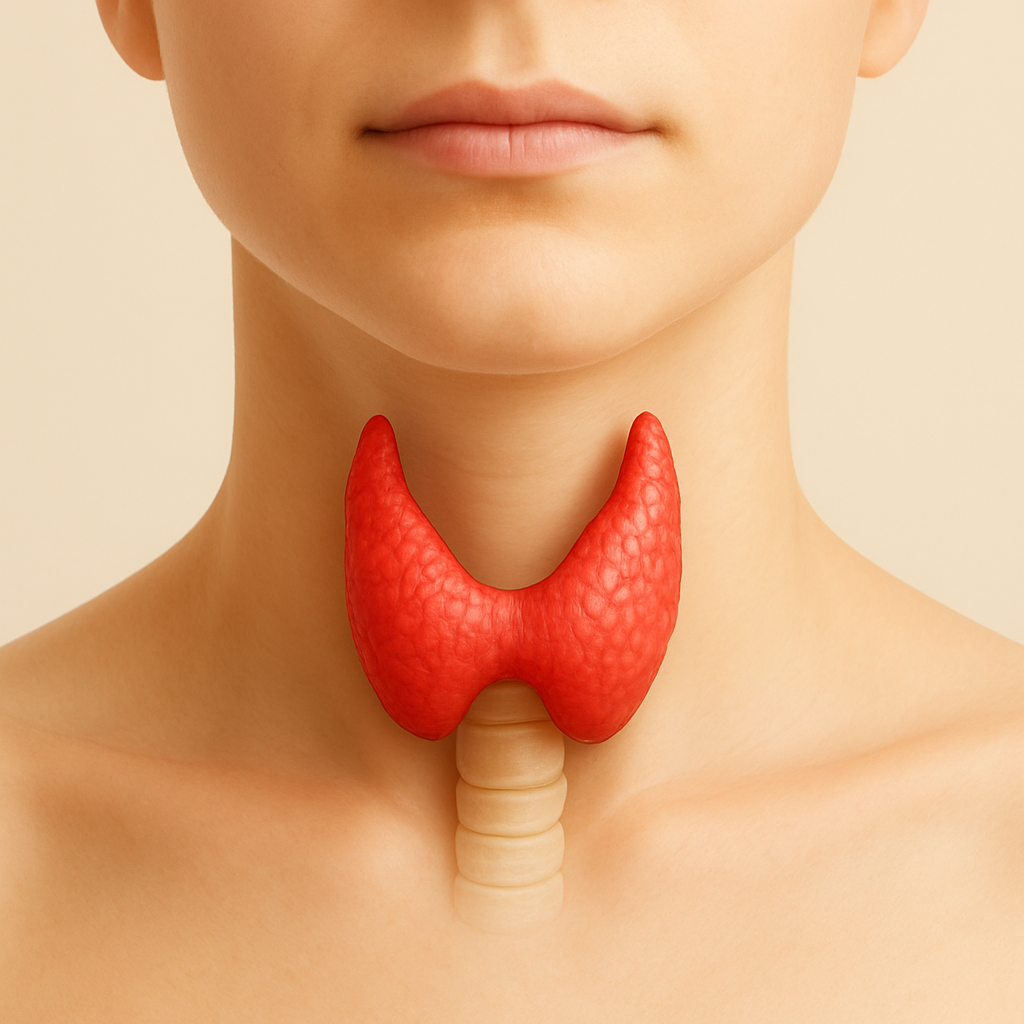
The inclusion of TSH, Free T4, and Free T3 provides a thyroid-related snapshot that can be useful for general monitoring. These markers are often reviewed together to contextualize thyroid signaling and circulating thyroid hormones. Results should be discussed with a qualified professional, especially if symptoms or existing thyroid medication are involved.
Liver Health
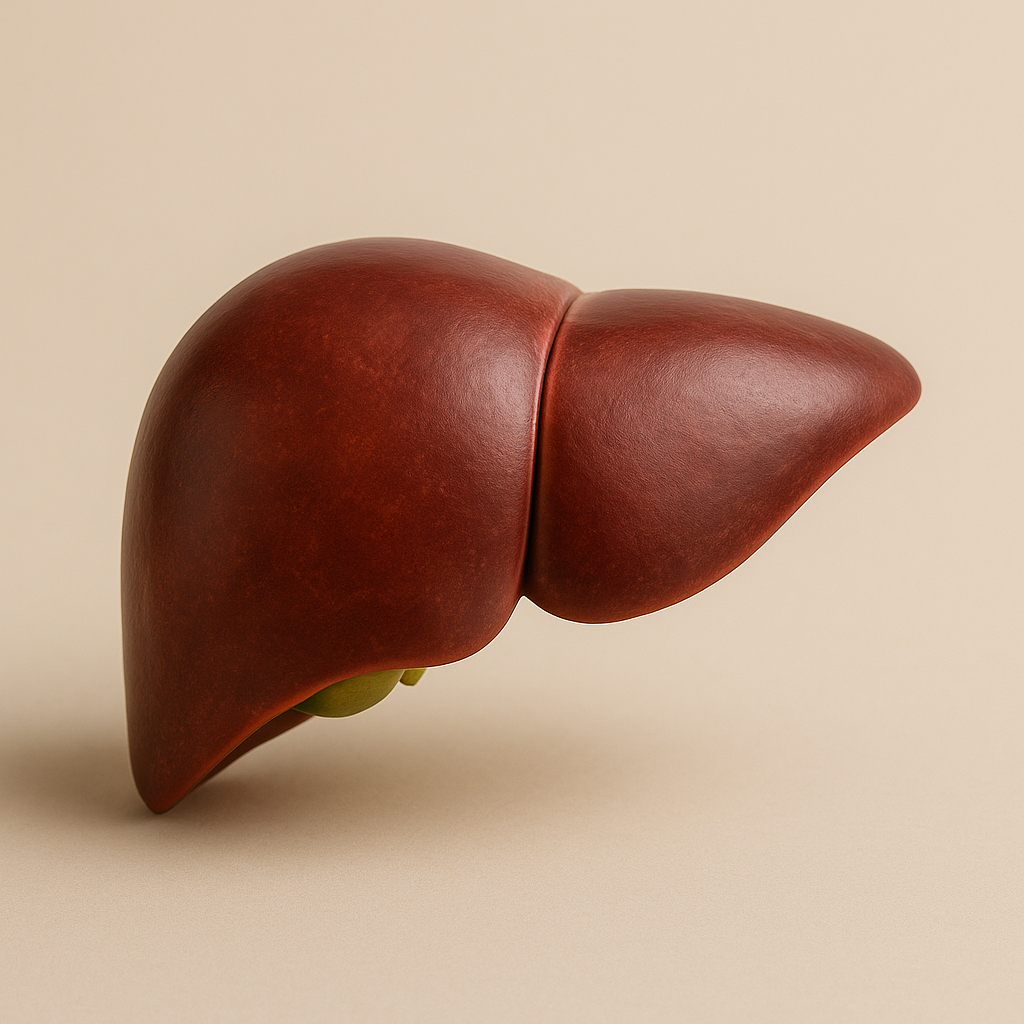
ALT (ALAT) and GGT are included as common liver-associated enzymes used for routine monitoring. These values can be reviewed alongside lifestyle factors such as alcohol intake, training load, and overall diet quality. Interpretation is typically done in combination with other clinical context rather than as standalone indicators.